

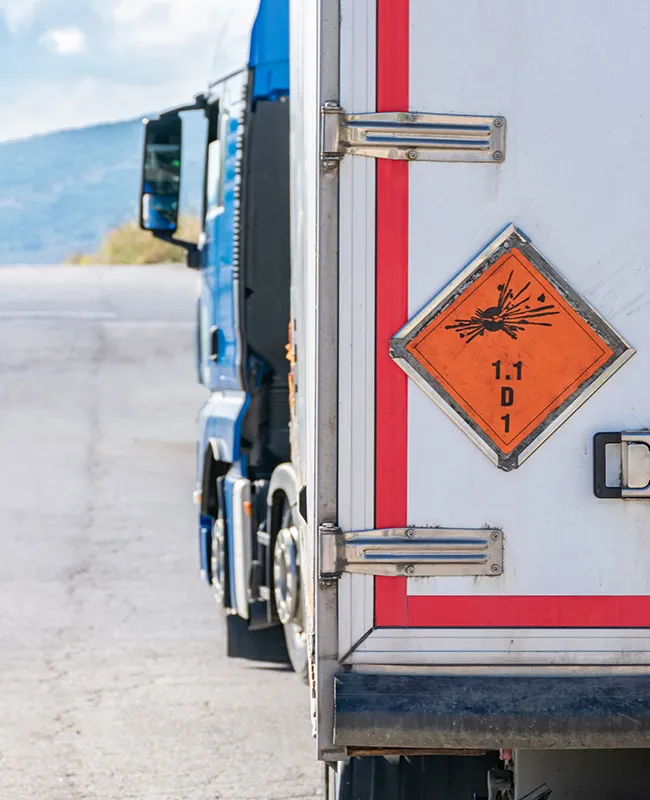
The Port of Baltimore is the Mid-Atlantic's defense-corridor gateway. **Aberdeen Proving Ground (APG)** — the U.S. Army's principal weapons test and evaluation installation, home of the Army Test Center, the Army Research Laboratory, and DEVCOM's munitions and weapons program — sits 30 miles north of Baltimore on the Chesapeake Bay. APG receives, tests, and ships back high-value Class 1 freight: experimental munitions, fuze and primer development lots, propellant trials, energetic materials R&D, and the ordnance components produced by defense primes (Northrop, RTX, BAE, Lockheed, GD) under cost-plus DEVCOM contracts. The freight profile is lower in volume than Camp Lejeune ASP or MOTSU but materially higher in per-shipment value and regulatory sensitivity.
**Why this matters in Baltimore specifically:** Maryland's tunnel and bridge restrictions make Class 1 routing through Baltimore non-trivial. The Fort McHenry Tunnel and Baltimore Harbor Tunnel both prohibit Class 1 explosives. After the **Francis Scott Key Bridge collapse in March 2024**, the secondary Class 1 routing on the I-695 outer loop became the only practical crossing of the harbor for placarded freight. A carrier without current Maryland Hazardous Materials Routing Registry knowledge — and without a DOT Hazardous Materials Safety Permit under 49 CFR Part 385 Subpart E — risks staging a Class 1 load into a prohibited corridor and generating a citation that lives in the Federal explosives license transfer record.
Ramar drays from Baltimore and the surrounding DC-Baltimore defense corridor under HMSP authority, with routing pre-validated against the post-Key-Bridge Maryland network. Baltimore is FTZ-eligible (FTZ #74), with on-dock CSX and Norfolk Southern rail at Seagirt. The drive time from Ramar's home yard is approximately 7 hours — team-driver coverage is the operational default for the Class 1 attended segments, with single-driver coverage permissible for Class 1.4 non-attended freight.