

Ramar Transportation
OPS·07

Wilmington Fire Marshal Escort

City-permitted DG drayage to the Port of Wilmington with Fire Marshal escort. We replace the shipping-agent middle layer.

operating brief

Drayage of Class 1 dangerous goods through the City of Wilmington to the Port of Wilmington requires a Fire Marshal escort under city ordinance. Historically, that escort coordination has been handled by a separate layer of shipping agents — a third-party desk that freight forwarders had to engage on top of their carrier and on top of the port itself. The result is a four-vendor chain (forwarder → agent → drayman → port) for what is operationally a single move.

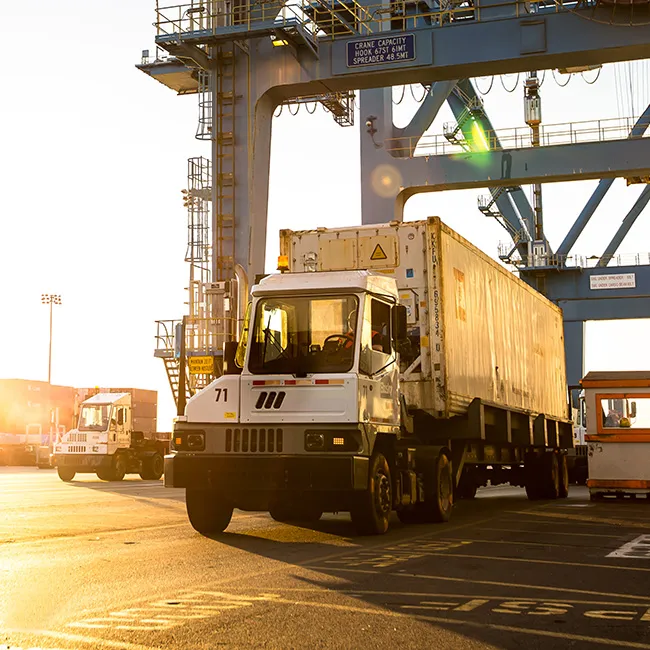
Ramar holds a permit issued by the Wilmington Fire Department for Class 1 dangerous-goods drayage to the port with Fire Marshal escort. The escort coordination is now handled directly by Ramar dispatch — same operator, same shipping papers, same chain of custody as the drayage itself. Forwarders no longer need to engage an additional shipping agent for this leg; the carrier they hired is the carrier that arranges the escort.

This is a Wilmington-specific capability. Other Atlantic Coast ports have their own escort and routing protocols handled inside our standard drayage service. The Fire Marshal Escort offering exists because the Wilmington-specific permit and process is uniquely friction-heavy — and because Ramar is now positioned to remove that friction.

capabilities

What this service covers

  • Permit holder — Wilmington Fire Department DG drayage authorization
  • Direct Fire Marshal escort scheduling and coordination
  • Class 1.1 and 1.4 drayage from Leland yard to Port of Wilmington
  • MOTSU-staging coordination layered with city-escort routing
  • Single shipping paper covers carrier + escort — no separate agent invoice
  • Eliminates the shipping-agent middle layer historically required
  • Same dispatcher owns the escort coordination and the drayage
process

How a load runs

  1. 01 / 04

    Permit verification + load classification

    On request, Ramar dispatch verifies the load against the city permit's covered classes and routing. Class 1 loads requiring escort are routed to the escort-coordinated workflow; non-escort-required loads route through standard drayage.

  2. 02 / 04

    Fire Marshal scheduling

    Ramar dispatch contacts Wilmington Fire Department to schedule the escort window — typically 24-72 hours in advance. Routing, staging, and any special handling notes are filed before the move.

  3. 03 / 04

    Escorted drayage execution

    Driver presents at origin (yard, transload facility, or off-port staging) and is met by the Fire Marshal escort vehicle. Escort accompanies the load through the city to the Port of Wilmington gate, where the escort releases the load to port routing.

  4. 04 / 04

    Documentation close-out

    Escort completion is recorded against the original shipping papers. No separate shipping-agent paperwork is required — the escort coordination is part of Ramar's chain-of-custody record.

regulatory framework

Operates under

questions

Fire Marshal Escort — Frequently Asked

Why is a Fire Marshal escort required for some loads through Wilmington?
Wilmington city ordinance requires Fire Marshal escort for certain Class 1 dangerous-goods drayage routes through the city to the port. Ramar holds the city permit and coordinates the escort directly.
Did Ramar always provide this service?
No. The Wilmington Fire Department permit was issued recently. Previously, freight forwarders had to engage a separate shipping agent to coordinate the escort. Ramar now holds the permit and absorbs that coordination into its standard drayage workflow.
Does this apply to non-Wilmington port drayage?
No. Charleston, Savannah, Norfolk, and other ports follow their own escort and routing protocols, which are handled inside Ramar's standard Integrated Port Drayage service. The Fire Marshal Escort offering is Wilmington-specific.