

Ramar Transportation
OPS·04

Secure In-Transit Holding

Schedule recovery when shipments can't move. Vessel late, terminal congested, regulatory hold — Ramar holds the load and the chain of custody.

operating brief

Dangerous goods don't always move on schedule. Vessels arrive late. Terminals call hazmat exclusion windows. Customs holds a load for documentation review. A DOT inspector pulls a Class 1 shipment for review. When that happens, the freight has to sit somewhere — and somewhere is not always a public yard or a bonded warehouse that accepts placarded cargo.

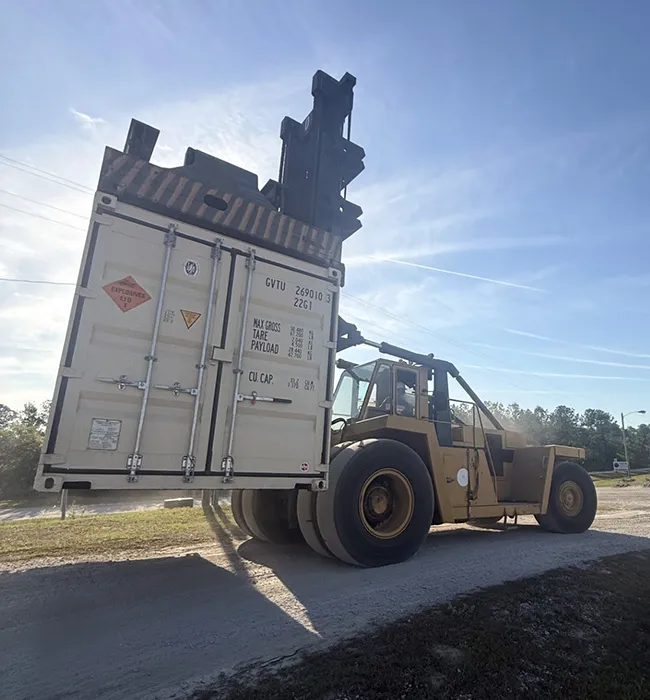
Ramar's Secure In-Transit Holding is a short-duration, 49 CFR-compliant chain-of-custody service for placarded freight in transit — not magazine storage. We operate under 49 CFR exclusively. The freight stays under the original carrier (Ramar), under the original shipping paper, with class-appropriate segregation per 49 CFR 177.848 and attendance per 49 CFR 397 Subpart B, on our secured, gated, monitored yard outside Wilmington NC. Schedule changes that would normally trigger a vendor handoff and a paperwork reset stay inside the integrated chain — same chain of custody, same accountability, no new bill of lading.

Long-duration magazine storage of Class 1 freight is a separate regulatory regime that requires specialty regulatory licenses. Ramar does not provide magazine storage — for that, freight is consigned to a magazine-licensed facility. What we do is hold the chain of custody intact while the in-transit hold runs, so a one- or five-day weather, customs, or routing event doesn't fracture the operating chain.

This is the service customers don't think about until they need it. By that point, the alternative is a panic call to a third-party warehouse that may or may not accept the load.

capabilities

What this service covers

  • Class-segregated in-transit holding per 49 CFR 177.848
  • Continuous attendance and surveillance per 49 CFR 397 Subpart B
  • Bonded customs holds at FTZ-eligible ports (through partners)
  • 24/7 monitored, fenced, gate-controlled yard
  • Schedule recovery — load resumes onward dispatch when window opens
  • Single-document continuity — no new shipping papers, no chain-of-custody reset
  • Short-duration: hours to days, not long-term storage
process

How a load runs

  1. 01 / 04

    Hold trigger

    Schedule change is detected (vessel delay, terminal exclusion, customs hold, DOT inspection, weather routing). Ramar dispatch routes the load to a class-appropriate holding spot on our yard or partner yard.

  2. 02 / 04

    Receipt and segregation

    Load is checked in, placards verified, attendance protocol set per 49 CFR 397.5/397.7, segregation distance applied per 49 CFR 177.848 if other classes are present. Driver attendance is maintained for attended classes.

  3. 03 / 04

    Continuous monitoring

    Yard runs 24/7 monitoring for the duration of the hold. Customer receives daily status updates and any flag events (weather, security, regulatory activity).

  4. 04 / 04

    Resumption and onward dispatch

    When the hold window clears, load resumes within the integrated chain — drayage, transload, or long-haul — under the original chain of custody and original shipping paper.

regulatory framework

Operates under

questions

In-Transit Holding — Frequently Asked

Is this magazine storage for Class 1 freight?
No. Ramar's Secure In-Transit Holding is short-duration, 49 CFR-compliant chain-of-custody holding for placarded freight in transit. Long-duration magazine storage of explosives is a separate regulatory regime that requires a different license — we don't provide that service.
How long can a load stay in in-transit holding?
Hours to days, typically. Vessel-delay holds can run 5-10 days; customs and routing holds usually clear faster. There is no hard cap inside an in-transit posture, but anything longer than a routing event is properly handled by consigning the freight to a magazine-licensed facility.
Does the load need new shipping papers when held?
No. The original shipping papers, placards, and chain of custody continue through the hold. That is the operational difference between in-transit holding inside an integrated operator vs. a third-party warehouse handoff.
What regulations does Ramar operate under for this service?
49 CFR exclusively. Segregation per 49 CFR 177.848, attendance per 49 CFR 397 Subpart B, parking per 49 CFR 397.7. We do not operate under any non-49-CFR storage regime.